

Character Development: Putting the Other on the Page, by Beth Kephart
Oh, her. We say. She’s such a character.
And then we proceed:
She was the first in her family to leave the farm, following her graduation from a junior college. She typed 100 words a minute. She was nobody’s assistant. She wore crimson shoes with burnt-orange laces and tights that went saggy at the knees, and one November, when the sun wouldn’t shine, she wrapped the old birch trees with the yellow scarves that she’d stayed up through three candlelit nights warping and wefting.
Is that it? Have we proven our point? Are we done? Have we characterized our character, cataloged our other? Would the avid listener to whom we’re telling this tale recognize her if she walked into the room?
Would this her be understood?
Embraced?
Forgiven?
Character development is an elastic exercise. It is also a moral one.
Character development is an elastic exercise. It is also a moral one. For what exactly characterizes a character? How are the nuances honored, the inherent contradictions, the back stories that explain or honor or forgive or celebrate the fact of those crimson, burnt-orange laced shoes and those wind-blown yellow scarves? How can the words say something more than the photographs, the scenes convey more than the anecdotes, the certain facts be interwoven with all that remains hidden? Having been made of people, shaped by people, defined in opposition to or in allegiance with people, memoir writers have little choice but to put others on the page. How is the enduring question.
Prettily glossed characters are dull; they are not to be believed; they do not advance plot. Falsely accused characters—intentionally falsely accused—brand the memoirs they live in as revenge therapy. Memoirists who put others on the page simply to glorify themselves by way of contrast will be seen for what they are: as opportunists.
I’ve come to think of character development as the art of sustained literary complexity. I’m grateful for the tools at our disposal. Here are just some:
Character as Narrative Resume (with a twist)
“After Yale—class of late nineteen-twenty something, or early nineteen-thirty something, my father batted around the country, living a high life in New York among school and college chums, flying as a test pilot, marrying my mother, the daughter of a rear admiral,” Geoffrey Wolf writes in The Duke of Deception. “I was born a year after the marriage in 1937, and three years after that my father went to England as a fighter pilot with Eagle Squadron, a group of American volunteers in the Royal Air Force.”
No scene to speak of in the passage above. No details that would identify the Duke were he to walk into a room. Wolf is listing facts in near-resume fashion, ticking off years and achievements in chronological order—a strategy that has deadened many a passage in many a memoir. What makes Wolf’s use of narrative resume in the early pages of his memoir different is what the reader will discover later—that most of these presented “facts” are lies the father told, lies that stand at the heart of the Duke’s true story.
Narrative resume alone can’t develop characters in memoir; resume presented simply as resume is static and quantifying. But when used strategically—to foreshadow or surprise—the narrative resume has a place in memoir. It can wrap the character in intrigue.
Character as a Physicality
In “Notes of a Native Son,” James Baldwin leans on reminiscence, scene, and hypothesis—not resume—to characterize his father. To establish the physicality of the man, Baldwin reports and supposes, imagines and asserts, stitches in the observation of another. You’d recognize Baldwin’s father were he to walk into a room. You’d stand a little taller to greet him:
He was, I think, very handsome. I gather this from photographs and from my own memories of him, dressed in his Sunday best and on his way to preach a sermon somewhere, when I was little. Handsome, proud, and ingrown, “like a toenail,” somebody said. But he looked to me, as I grew older, like pictures I had seen of African tribal chieftains: he really should have been naked, with war paint on and barbaric mementos, standing among spears.
Hands can speak for the other in memoir: They were “far too durable for the life she now led, and I sensed they would have grabbed the rabbit that plagued our garden and wrung its neck without thinking…” (Hope Jahren, in Lab Girl, writing of her mother).
Expressions: “His first face was always the smiling one.” (Richard Ford, Them: Remembering My Parents).
Gait: “He walked, for example, weirdly balanced, bouncing on the ball of his feet, as if he were about to pitch forward, blindly, into the unknown.” (Paul Auster, The Invention of Solitude).
In fact, any distinguishing feature can, if written with distinction, characterize the others in the story. The key lies in that word distinction: readers need to know more about the eyes than their color, more about the scar than its size, more about the bunion feet than the angle of the bunions. Readers need to know how the physical traits speak for the soul and history of the other—or how they might. Readers hope that the physical traits themselves will hint at larger stories—the hands were murderous, the first inclination was a smile, the man was weirdly balanced.
Character as Words Said and Not Said
Voice is volume, pace, and affect. Talk is over-much or not enough or just precisely right. To suggest that speech develops character in memoir is not to call for long passages of credibility-straining, plot-congesting dialogue. It is, instead, to underscore the obvious: Memoirists who hope to develop the characters in their books must consider how the other talks (or doesn’t).
Few do this better than Annie Dillard in An American Childhood:
Mother must have cut a paradoxical figure in her modernist living room, with her platinum blond hair, her brisk motions, her slender, urbane frame, her ironic wit (one might even say “lip”)—and her wee Scotticisms. “Sit you doon,” Mother said cordially to guests. If the room was too bright, she asked one of us to douse the glim. When we were babies, she bade each of us in turn, “Put your wee headie down…”
This was all the more remarkable because Mother was no more Scotch, nor Scotch-Irish, than the Pope.
How do the others in your story whisper? How do they laugh? How do they answer the phone? How and where and when do they sing, if they sing? How do they tell their stories? How do they maintain their silence, or speak through their silence, or break their silence? How do they miscommunicate? What do they say when you finally ask them: Why birch trees? And, Why yellow?
There is a story in all of this. There are characters, developed.
Character as the Person We Misunderstood
In one of the most affecting essays I’ve ever read, “Mrs Dunkley,” Helen Garner writes of the teacher she thought she understood—a teacher from her childhood days who both awakened Garner’s love for learning and deeply intimidated her. Later in life Garner writes an essay about this experience and publishes it in a magazine. Later still, she receives a letter about that magazine essay from the daughter of the teacher. A photograph has been enclosed.
It is revelatory.
It is pulse quickening.
It forces Garner to reconsider everything she thought she knew about Mrs Dunkley, everything she’d said, every tool she’d used to develop her former teacher’s character:
I thought I knew you, Mrs Dunkley. I thought that by writing about you I had tamed you and made you a part of me. But when I looked at that photo, I felt as if I’d walked into a strange room at night, and something imperfectly familiar had turned to me in the dark. The real Mrs Dunkley shifted out from under the grid of my creation, and I saw you at last, my teacher: an intense, damaged, dreadfully unhappy woman, only just holding on, front up to the school each morning, buttoned into your black clothes, savagely impatient, craving, suffering: a lost soul.
Just as we’ll never perfectly understand ourselves, we’ll never perfectly understand the others in our lives or on our pages. We may develop our characters well, but we can’t develop them with absolute precision, for we will never know all we might have known, will never guess at all the secrets, will never be the other, will not, in that same November, dress birch trees in yellow scarves while our tights sag about our knees.
What we can do, when we write our others into our stories, is leave plenty of room for alternative explanations and possible misunderstandings. We can develop our characters relentlessly, and then develop them again. We can keep watch over our own shoulders for what we might be getting wrong, for what we are not yet saying, for what we don’t have the words to say.
We can write our characters until they’ve acquired the dimensions they deserve.
“without them we don’t have a story”
Character Within the Context of a “We”
Ultimately, we write other people into our memoir pages because without them we don’t have a story. The other is the friend who saw us through tumult, the mother whose addiction shadowed our childhood, the uncle who taught us love, the teacher who left the lights on and the chalkboard primed for our mathematical explorations, the bully who forced us to find courage, the aunt who loomed through the night, and loomed only with the color yellow. We aren’t who we’ve become without these others, and our memoirs, and our readers, know this.
And so, in the end, we must write the “we,” which is to say that we must develop our characters in relationship to ourselves. We must, in ways both overt and implied, bring that resume, that physicality, that way of talking, that rumor, that myth, that misunderstanding of the other to bear on our own selves. We must make it abundantly clear how our character has been shaped by theirs.
Maybe we’ll write of that “we” in terms of mutual enhancements—what we taught, what we learned, what we gained. This is what Gail Caldwell does when remembering her friend, Caroline Knapp, in Let’s Take the Long Way Home: “She taught me how to walk across frozen trails and sideways down steep hills, digging my feet into the terrain. I taught her the freestyle in an indoor pool, coaxing her to lay her face in the water to learn to regulate her breathing…”
Or maybe we’ll write of the “we” as if the other and ourselves were, at one point, by our own assessment, one and the same character. This is what Ann Patchett does in Truth & Beauty, her portrait of her friendship with the writer Lucy Grealy: “We invented time, and we could not kill it fast enough. After dinner, dancing, and baths, we read, wrote our poems and stories, brushed our teeth, and tumbled into bed, only to find the next day was exactly the same.”
Or maybe we’ll center the “we” around a mutual obsession, as Anne Fadiman does, in an essay about the natural-word fascinations she shared with her brother. From the essay “Collecting Nature”: “If you have ever seen a luna moth—pale green, hindwing tapering to long slender tails, antennae like golden feathers—you have not forgotten it. It was a hot, humid, firefly-filled summer night, and Kim and I were sitting outside on the front lawn.”
Or maybe we’ll deploy that “we” as a dark foil, which is the choice Brian Doyle makes when recalling the long-ago nemesis who implicated the author in cruelties the author now regrets. From “The Meteorites”: “It is a mark of my own chalky insecurity and mulish youth that I hounded Andy every chance I got, reporting his crimes to the director, ragging him from the sidelines of softball games, and once, by incredible luck, catching his fist in mid-swing … and so mortifying him before a girl, the ultimate humiliation for him and for me too, then. And now.”
Whatever we do, we’ll have to make our “we” count—make it vivid, make it honest, make it telling, make it worthy of any theater in the round. Fully developing the other, we more fully develop ourselves. We find the heart of our true stories. We ask, again, Who was that lady with the funny shoes and why does she keep tangling up inside my memory, and how has she become a metaphor, a foil for me?
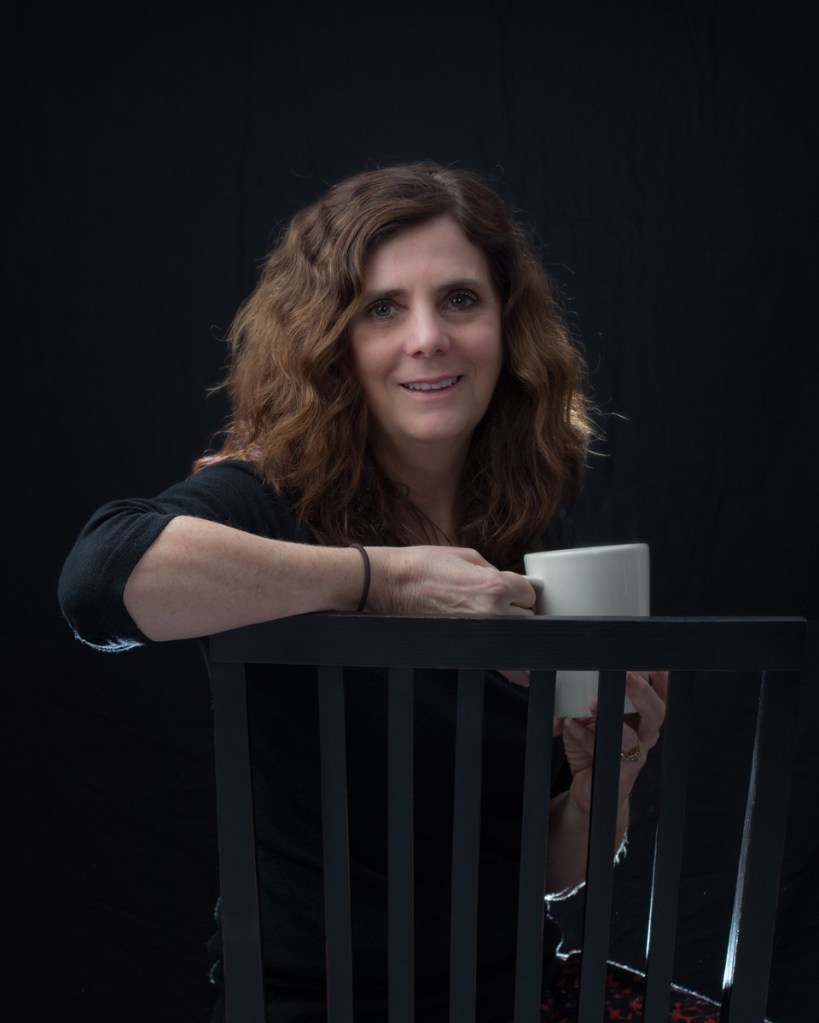
Beth Kephart is the award-winning author of some three-dozen books in multiple genres, an award-winning teacher at the University of Pennsylvania, co-founder of Juncture Workshops, and a widely published essayist. Her memoir in essays, Wife | Daughter | Self, is due out from Forest Avenue Press in March 2021.
More at bethkephartbooks.com.
IG: @bethkephartnow
Twitter: @BethKephart
FB: @bethkephart
 Causeway Lit
Thank you for the very insightful read! I appreciate it.
LikeLiked by 1 person